
Handling Difficult Parent Conversations with Grace and Clarity
- Dalbir Singh
- Jul 21, 2025
- 2 min read

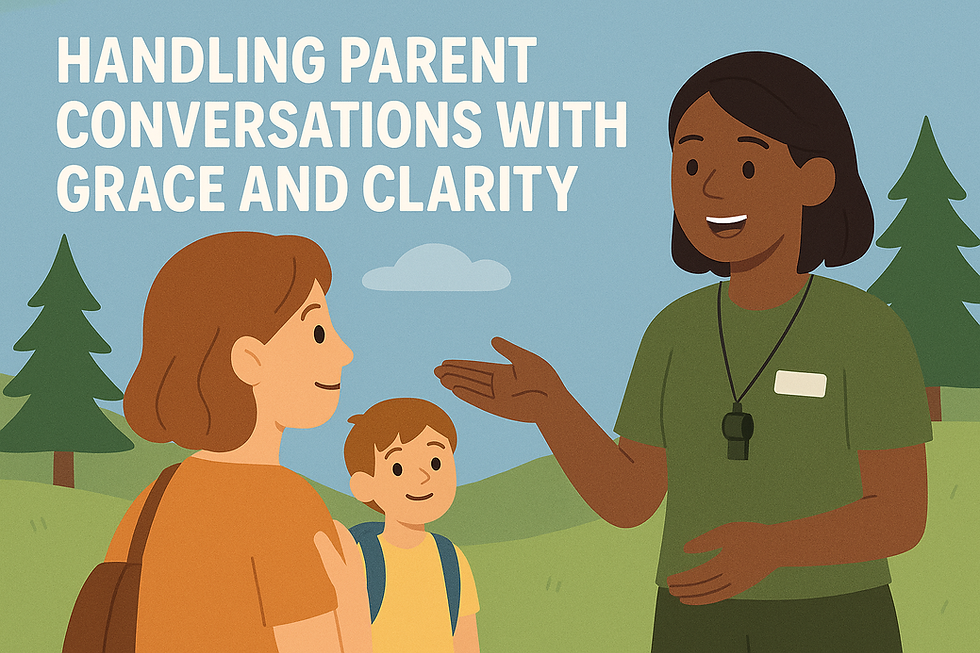
No matter how well a camp is run, challenging conversations with parents are inevitable. Whether it's about camper behavior, safety concerns, missed expectations, or scheduling issues, these interactions can be tense and emotionally charged.
But with the right tools, these conversations can become opportunities—to build trust, show professionalism, and reinforce your camp's values.
Here’s how camp directors can approach difficult parent conversations with grace and clarity.
👂 1. Lead with Listening
When a parent reaches out with a concern, it often comes from a place of love and protectiveness. They want to be heard. Start by listening without interrupting or becoming defensive.
💬 Try saying:
“Thank you for bringing this up. I really want to understand your perspective.”
Even if their tone is off or their facts are fuzzy, letting them speak fully diffuses much of the initial tension.
✍️ 2. Stick to the Facts, Not the Feelings
Once emotions are aired, ground the conversation in clear, specific information. Focus on observations and actions rather than assumptions or interpretations.
Instead of:
“Your child was being disruptive.”
Try:
“During cabin time, your child was throwing pillows across the room after being asked twice to stop.”
📌 Use neutral language and avoid blame. You're there to problem-solve, not criticize.
💡 3. Be Transparent, But Professional
If something went wrong at camp—a minor injury, a camper conflict, a miscommunication—acknowledge it. Parents don’t expect perfection, but they do expect honesty.
✅ Own the situation:
“We didn’t communicate that policy clearly, and I understand why you’re frustrated.”
Then, offer a clear plan:
“Here’s what we’re doing to make sure this doesn’t happen again.”
This builds trust and models integrity.
🧘 4. Stay Calm—Even When They’re Not
It’s easy to feel flustered when a parent is upset, especially if you or your staff feel accused. But your calm presence is key.
Lower your voice instead of raising it.
Take notes while they speak—this shows you're taking their concern seriously.
If emotions run high, suggest a follow-up:
“Let’s pause here and revisit this tomorrow when we’ve both had time to reflect.”
📞 5. Pick the Right Medium
Some conversations need a phone call or in-person meeting. Email and text can easily lead to misunderstandings.
Rule of thumb: if it involves feelings or a safety concern, pick up the phone.
And always follow up with a written summary for clarity and documentation.
🤝 6. Reaffirm Your Shared Goal
End the conversation by returning to common ground: the child’s growth, happiness, and success at camp.
Say something like:
“We both want what’s best for your child, and we’re committed to supporting them while they’re here.”
Even the toughest conversations can end with a feeling of partnership, not conflict.
Final Thought
Difficult parent conversations aren’t detours—they’re part of the camp journey. With grace, clarity, and a healthy dose of empathy, you can turn moments of tension into stronger relationships and a better experience for everyone involved.


Comments